
Van Buren Township Previous Residents Sources
Previous residents are best traced by matching the type of question to the period of the record. A recorded deed can establish a transfer in the title chain. A city directory, criss-cross entry, newspaper, or census record can instead show a dated household or address mention. The current parcel record is the starting identifier, not proof of title or occupancy. Preserve the legal description, parcel identifier, printed street form, and jurisdiction label so that older records can be tied back to the same land even when an address or locality name changes.
| Source | Years it covers | Where held | What it shows |
|---|---|---|---|
| Wayne Register of Deeds historical books | 1703 to before 1960 | Register of Deeds office or mail search | Recorded land instruments and legal descriptions |
| Wayne deed index | 1960-1985, subject to verification | Online index, paid account, office, or mail | Grantor and grantee trail, with image availability uncertain |
| Wayne technology-era records | 1986 to present | Online search, office, or mail | Indexed instruments and paid document-view route |
| Belleville digital directories | 1921-1972 | DigiFind-It and library sources | Dated local name, street, institution, or business mentions |
| Local newspapers and cemetery sources | Varies by collection | BADL and township clerk channels | Obituary, burial, notice, and place-history leads |
Start with the newest known record if the goal is a backward title trail. Start with the local archive if the goal is a household history in a particular year. The sources should not be merged into one undated list. A title record, an address listing, and an obituary each answer a different question about past residents.
Van Buren Township Deed Records Limits
The Wayne County Register of Deeds search-services page describes two different online routes. Free Public Search is name-only, using grantor or grantee and returning an indexed listing without images or printing. The paid On-Demand account adds address, legal description, parcel or tax ID, and Liber/Page searching, plus document viewing and printing. The paid path requires a valid United States credit card. Published pricing can change, so verify it before a search session.
The office also publishes two different statements about online depth. The search-services page says documents reach back to January 1, 1960, while the main office page says online documents are available after 1986. Treat the difference as an access question, not as a coverage claim. Ask the office about the requested year, missing images, books, or microfilm. In-person searches have required appointments since October 2025, and mail search is an alternative when the online record stops.
The Wayne County Register of Deeds is the official historical land-record custodian.
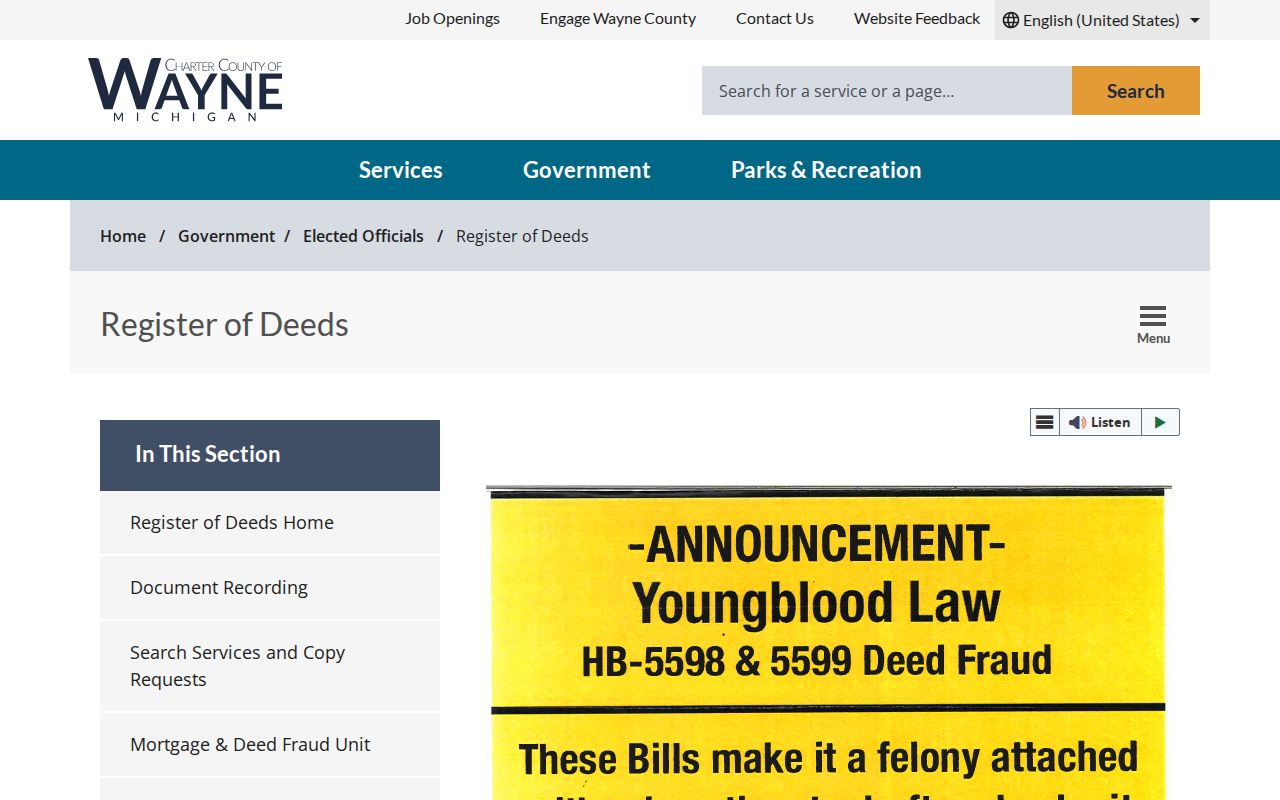
The Register of Deeds holds the recorded-transfer route, while a directory or newspaper supplies a separate time-stamped household clue.
Tracing Van Buren Township Deed Records
The Register of Deeds is the authority for a recorded chain of title. Wayne County says its office maintains an index back to 1703 and was the first county to create a tract index connecting address or property descriptions. A tract index is particularly useful when an older house number is unreliable. Record the instrument or document number, recording date, Liber/Page or image reference, grantor, grantee, legal description, parcel ID, stated consideration if public, and restrictions or easements. Each field helps keep two nearby parcels or same-name parties apart.
- Open the current assessor or parcel record and copy the parcel identifier and legal description.
- Locate the newest recorded transfer by using the available name index or paid detail route.
- Record the prior party, recording date, document number, and legal-description wording.
- Search the earlier party in the opposite transaction role to find that person's acquisition record.
- Repeat the dated sequence, then move to office or mail access when the online result reaches its boundary.
For an office search, Wayne publishes $5 per-property searching unless a personal-residence waiver applies, $2 per page for copies, and $10 per document for certification. Mail search is listed at $15 per address, with the same published copy and certification charges. Confirm fees, appointments, and the requested record range with the office before relying on those figures.
Van Buren Township Legal Records Trail
Street text can change with a subdivision, parcel split, combination, rural-route convention, or an older locality label. The legal description is the land description recorded with an instrument, such as a lot and subdivision, section-township-range reference, or metes-and-bounds description. It is the better bridge when a modern street number fails. Compare it with the deed's parcel or tax identifier and the Wayne GIS or assessor record, but remember that GIS and assessment data are reference layers rather than title proof.
- Grantor and grantee
- The grantor conveys an interest in the recorded instrument; the grantee receives that interest.
- Chain of title
- A dated sequence of recorded transfers and related instruments for the same parcel.
- Legal description
- The recorded land description used to distinguish the parcel from a changing street-address label.
- Tract index
- An index organized around a property description, which can be more useful than a house number for older or irregular parcels.
Note: A name in a deed index is a recorded-party lead, and a certified document or office confirmation is needed when the exact title record matters.
Van Buren Township Previous Residents in Directories
For the household layer, use the 1921-1972 Belleville digital city-directory run and local newspaper holdings after the deed trail identifies the time period. The Library of Michigan city-directory guide explains that Polk directories commonly include a surname or household section, street entries, telephone listings, and classified pages. Bresser or criss-cross volumes are useful when the address is known first. A street entry can indicate a dated local listing, not the recorded ownership of the parcel.
The collection details belong with the Van Buren Township city directory resource; use it to locate the digital archive, BADL special collections, and the museum. For a backward trail, extract only the needed year, printed address, page image, and locality. Then pair that time-stamped entry with the relevant census year or local newspaper record. A city label of Belleville needs the township or address context checked before it is treated as a township result.
The Library of Michigan directory guide describes the state-level catalog, print, microfilm, and library-database routes.
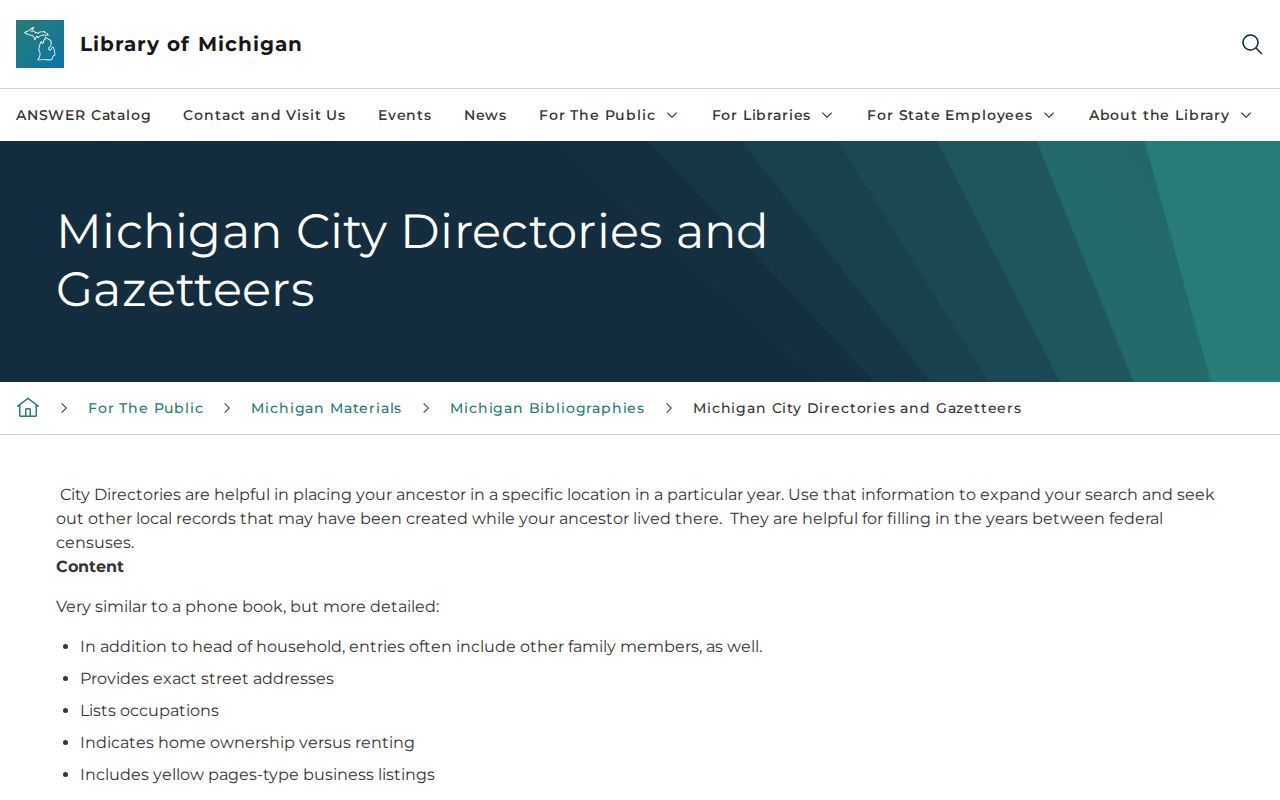
The Library of Michigan guide is a useful fallback when a Belleville-area scan has a missing year or a directory publisher needs to be identified.
Van Buren Township Historic Place Names
Historic names are a local search control, not decoration. Wayne County's history places the area at Snow's Landing in 1800, West Huron in 1834, Van Buren Township in 1835, and Rawsonville after the post office moved in 1838. Belleville later separated its government from the township in 1905. A record may use Huron Township, West Huron, Rawsonville, Belleville, Denton, French Landing, or Van Buren, depending on its date and purpose.
Search one name at a time with a date, street, legal description, or family name. Do not treat a Belleville mailing label as a township boundary. When a place name appears on a deed, directory, map, or clipping, preserve it as printed and compare the parcel jurisdiction before joining it to the modern address. This avoids a common backward-trail error: making a municipal claim from a postal or historical locality label alone.
Van Buren Township Cemetery Records Trail
The Belleville Area District Library has local newspapers on microfilm back to 1895, an obituary index, cemetery listings, local books, and related special collections. A newspaper notice can supply a date or local event; it should be cited with the paper title, issue date, page or image number, and locality. Obituary indexing is a finding aid, not proof of a death date or relationship. If an official vital record is needed and the requester is eligible, Michigan's access rules control the order route.
The Van Buren Township cemetery page identifies Denton, Otisville, Soop, and Tyler cemeteries and directs researchers to clerk forms and plot-map access. It does not expose a public interment-name index. A cemetery record may confirm a burial or plot lead, but it does not establish a prior street address or current family connection.
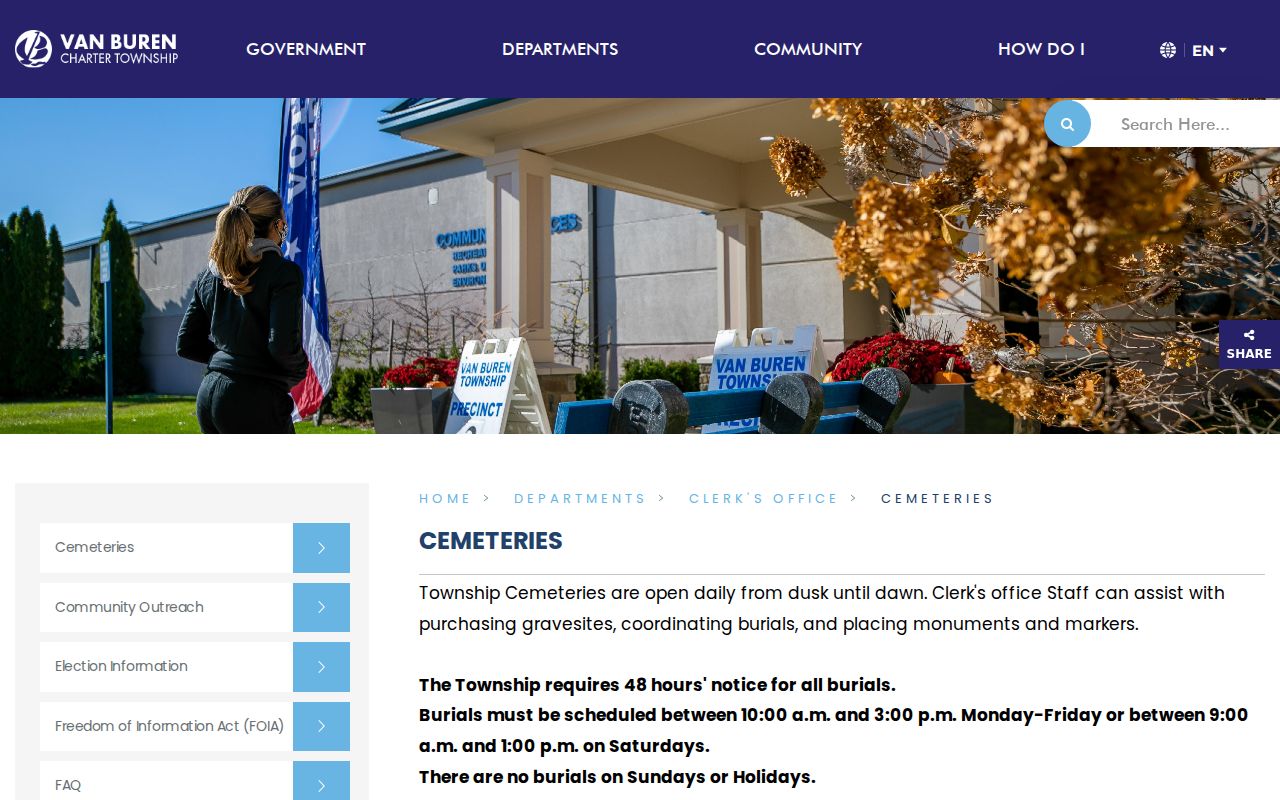
The township cemetery route adds a carefully bounded local record source when a prior-residents trail reaches an obituary, burial, or family-history question.
No confirmed local Sanborn map sheet was found in the researched official sources. Search the Library of Congress Sanborn Maps collection for Belleville or Rawsonville, then report an absent result rather than assuming the map covers the address.
Van Buren Township Fraud Guard Records
Wayne County's Deed Fraud Guard is a free monitoring service for matching land-record activity. A user registers an email address, adds the names to monitor, and saves the alert setup. An alert is not proof of fraud. Compare the instrument, date, and property details, then contact the Register of Deeds, law enforcement, or counsel as appropriate. The county's fraud information directs complaints through its register office and lists 313-224-5869.
A fraud alert belongs to the current records-safety layer, not to the historical account of previous residents. Keep alerts, deed images, instrument numbers, and a dated timeline private and use only official county contact routes for suspected misconduct.
Lawful Van Buren Township Records History
A responsible house-history record keeps ownership, directory entries, newspapers, cemetery references, and vital records in separate dated lanes. Michigan's genealogical release rules under MCL 333.2885 open death and marriage material generally after 75 years, divorce after 75 years, and birth after 110 years, subject to the issuing office's procedures. Earlier birth records have restricted eligibility. A historical name does not authorize publishing protected details or trying to uncover a protected address.
The Michigan vital-record access statute sets the genealogical release periods used for this kind of historical follow-up.
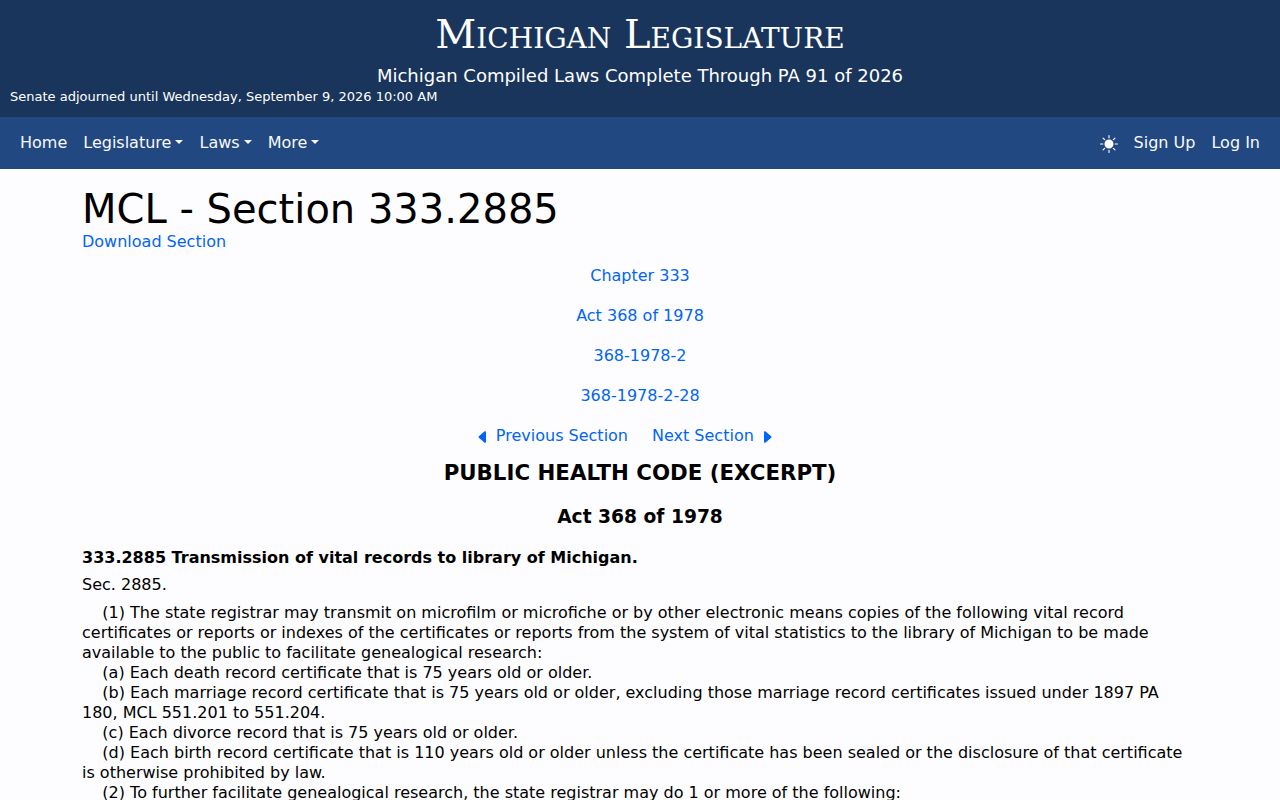
The statute helps identify when a vital-record request may be a lawful historical route, while the issuing office still controls its form, identification, and copy procedures.
Lawful use. Use prior-resident findings for family history, estate and heir questions, property history, or personal research. Do not use historical or current records to harass, target, or expose a living person.