
Van Buren Township Resident Lookup Records
Pick the record that matches the question before you search. The Van Buren Township BSA property portal is the best current lead for parcel and assessment detail. Ownership is not proof anyone lives there. Wayne GIS layers a township label onto parcel context. Courts surface public case information. Vital records come only from the custodian and may hinge on eligibility. Old street directories and obituaries can pin down a dated local mention. They cannot support a claim about where someone lives today. Used that way, each record keeps its proper weight.
| Record | What it can confirm | Local route | Access path |
|---|---|---|---|
| Parcel and assessment record | Parcel, jurisdiction, owner label, and address context | BSA UID 296 or Wayne GIS | Public search; assessor resolves discrepancies |
| Historical directory or newspaper | A dated name-and-place clue | Belleville Area District Library or DigiFind-It | Online collection, library contact, or onsite microfilm |
| Public court case | Case existence and public status in the proper court | 34th District, MiCOURT, or Third Circuit | Portal first, then clerk or public terminal |
| Vital record | A record event or eligible certified copy | MDHHS or Wayne County Clerk | Application, identification rules, and custodian channels |
| License or entity filing | Credential status or a filing role | Michigan LARA or SOS | Agency search with record-specific limits |
Anchor the search in address and jurisdiction when both are known. A Belleville mailing label can serve the city or the township. Keep the parcel ID, legal description, or township label on hand first. Tie it to a name only after that. For a historical question, start with the exact year and a directory or newspaper citation. For a court or vital event, go straight to the named custodian. A parcel result cannot answer those questions.
Van Buren Township Court Lookup Fields
A Van Buren Township mailing address points toward the 34th District Court, but the court's service area does not automatically claim every case tied to a township address. Some matters land elsewhere. For the online traffic search, the court requires a driver-license number, the issuing state, and a date of birth. The plea search works differently. It needs a date of birth plus either a license number with its state or a case number. Without those keys, the court asks requesters to submit a manual search by email to mailrequests@34thdistrictcourt-mi.org instead. Be careful with other people's identifiers. Supplying someone's license number or birth date without a lawful reason is not permitted. The documented 34th District search screen appears at the court's online service.
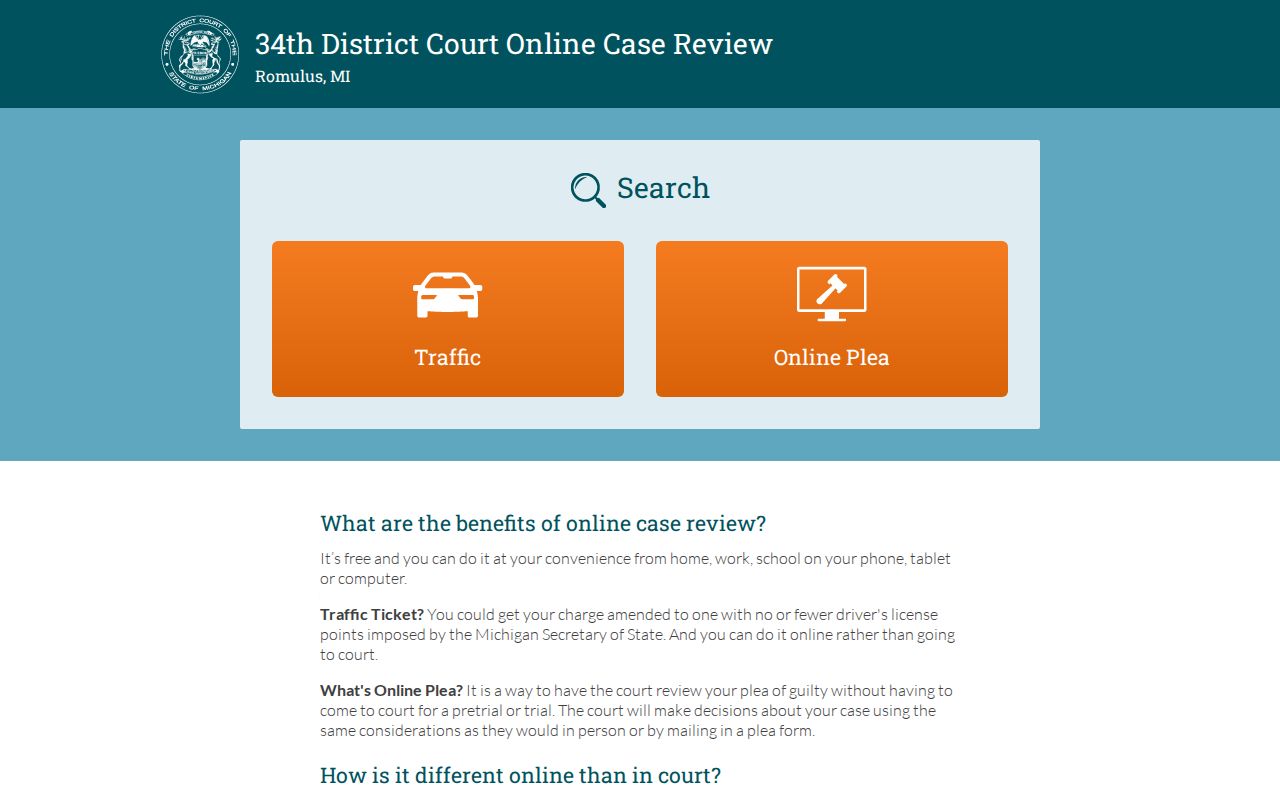
That court splits its traffic and plea searches into separate paths. This is why a name alone will not open either form. MiCOURT Case Search offers a broader starting point for participating Michigan courts. It requires a last name or business name. First and middle names stay optional along with an optional birth year. A second path takes a case number, a year, and a case type. Treat MiCOURT as a finding aid rather than the official court record. It leaves out whole categories. Those include adoption, juvenile matters, mental illness, name changes, PPO matters, and wills. Circuit-level work moves to Wayne County. The Third Circuit publishes Odyssey results, registers of action, and civil judgments. The Wayne County Clerk keeps the paper files along with certified-copy routes. MiCOURT's public interface documents the statewide starting point for this resident lookup.
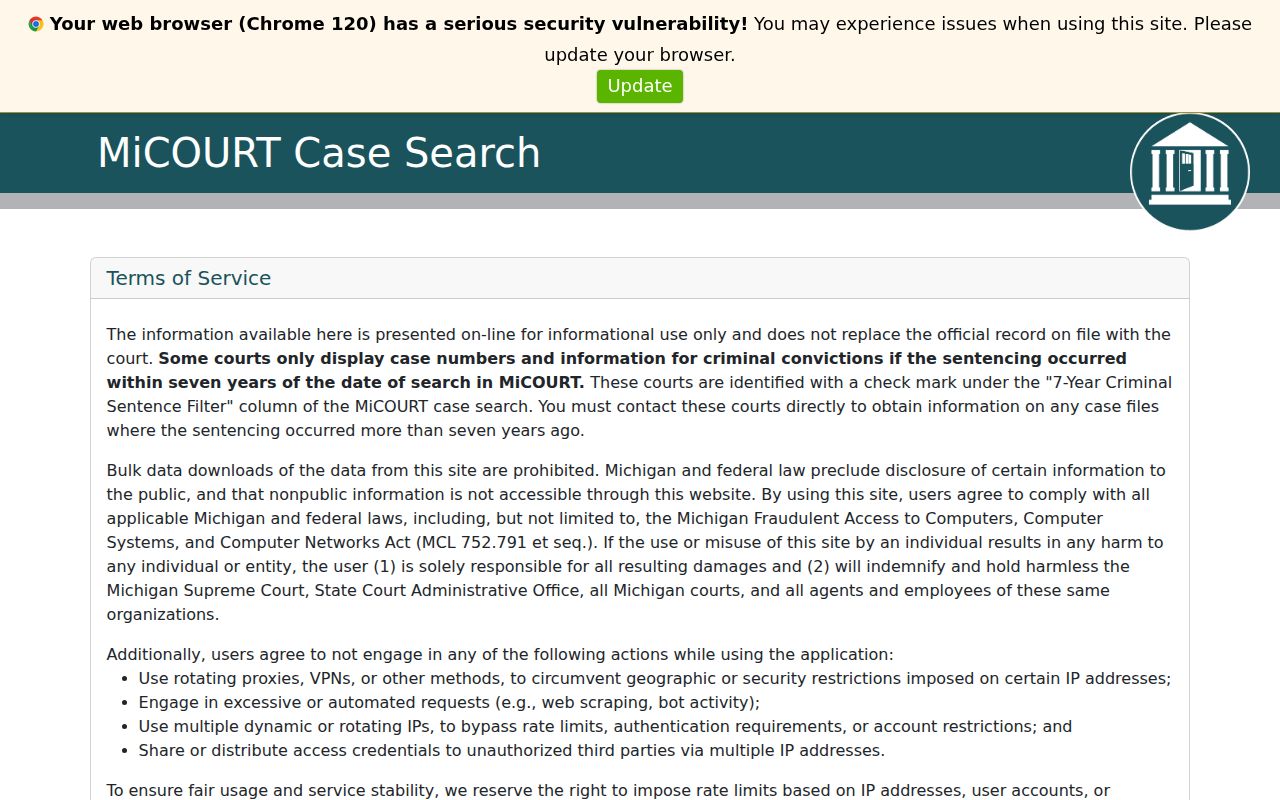
Confirm any result with the issuing clerk. Participating courts vary, and so do online display limits. When a case reaches beyond the district court, the Wayne County Third Circuit public case-search route is the proper next stop.
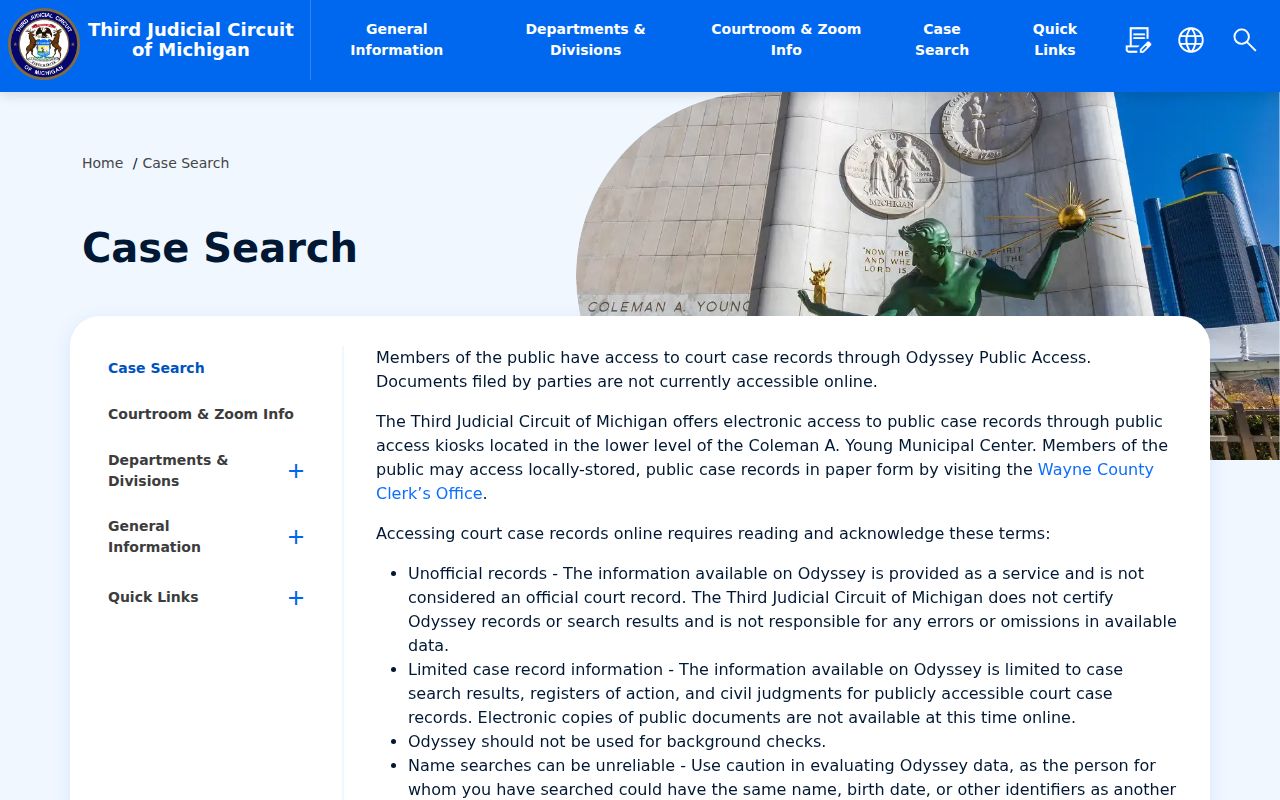
Electronic copies of Third Circuit case documents are not part of the public search results; the documented fallback is a kiosk at the courthouse or a request through the clerk. A federal case is a different path entirely. It belongs in PACER and the Eastern District of Michigan, both of which require an account and charge under the judiciary's current fee schedule.
Van Buren Township Court Result Inventory
Treat a court result as a limited record inventory rather than a story about a person. The official MiCOURT documentation describes each case response as carrying a court-instance identifier, a docket or tracking ID, case year, case number, and a case-type code with its type, plus links to participant, judge, or charge data where that information is public. Depending on the portal, a public result can also show a filing or creation date, public and case status, a next hearing, and a balance, but only when those fields are included.
| Court instance | Identifies the court that supplied the result. |
|---|---|
| Docket or tracking ID | The system’s case identifier, recorded with the source date. |
| Year, number, and type | Separates similar case numbers and shows the category. |
| Public status | Shows only what the portal makes publicly available. |
| Participants or charges | Use only if the result displays them and confirm with the clerk. |
Van Buren Township publishes no live docket of its own. The 34th District forms define their fields and the manual-search fallback. They return no case result by themselves. Third Circuit offers public-access kiosks at the Coleman A. Young Municipal Center, and its clerk route handles paper files, certified copies, and record searches. No probate-name portal exists. Test MiCOURT participation first, then contact the probate clerk when an estate file is the real question.
Note: Record the court, case identifier, result date, and a clerk-verification step before relying on any public docket entry.
Resolve Same Names in Van Buren Township
Same-name mixups happen easily in Van Buren Township. A resident lookup here can pull Belleville city records, a Belleville mailing address inside the township, or older locality names. Older names include Rawsonville, Denton, French Landing, or Huron Township. One match is never enough. A solid lookup needs two independent signals that agree. One pairing is a full name with a parcel's township label and date. Another is a directory entry paired with a newspaper notice from the same era. A common name plus a postal city is just a weak lead. Treat it that way.
Keep a small timeline for each person you chase. Record the exact spelling, middle initial, approximate year, address, locality, source date, and what each source actually proves. Note what each source proves. Call it high confidence only when an official record shows the same full name with matching jurisdiction, address, and date. A directory line plus a parcel or organization clue earns medium confidence at best. Conflicting initials, impossible dates, a city parcel, or a designated address should stay unresolved. Newer does not mean truer.
Van Buren Township Vital Record Routes
Vital records follow tighter rules than a resident lookup. Michigan MDHHS Vital Records fills statewide birth, death, marriage, and divorce orders. The Wayne County Clerk keeps county transcripts and applications. Birth copies go only to the subject, a named parent, a legal heir, a court-appointed guardian, or a qualifying power of attorney. A representing attorney also qualifies. The state also runs a narrower birth verification service. Death, marriage, and divorce requests each carry their own application rules and issuing office.
MDHHS births, deaths, and marriages reach back to 1867, and divorces to 1897. Under MCL 333.2885, genealogical release periods generally run 75 years for death, marriage, and divorce records. Births take 110 years, unless sealing or other restrictions apply. An obituary or cemetery entry can point you toward a Van Buren Township family. A directory line can too. It is still not a certified record. Never use it to fill in protected details.
The state's vital-record order guidance lays out who qualifies and which channels accept a request.
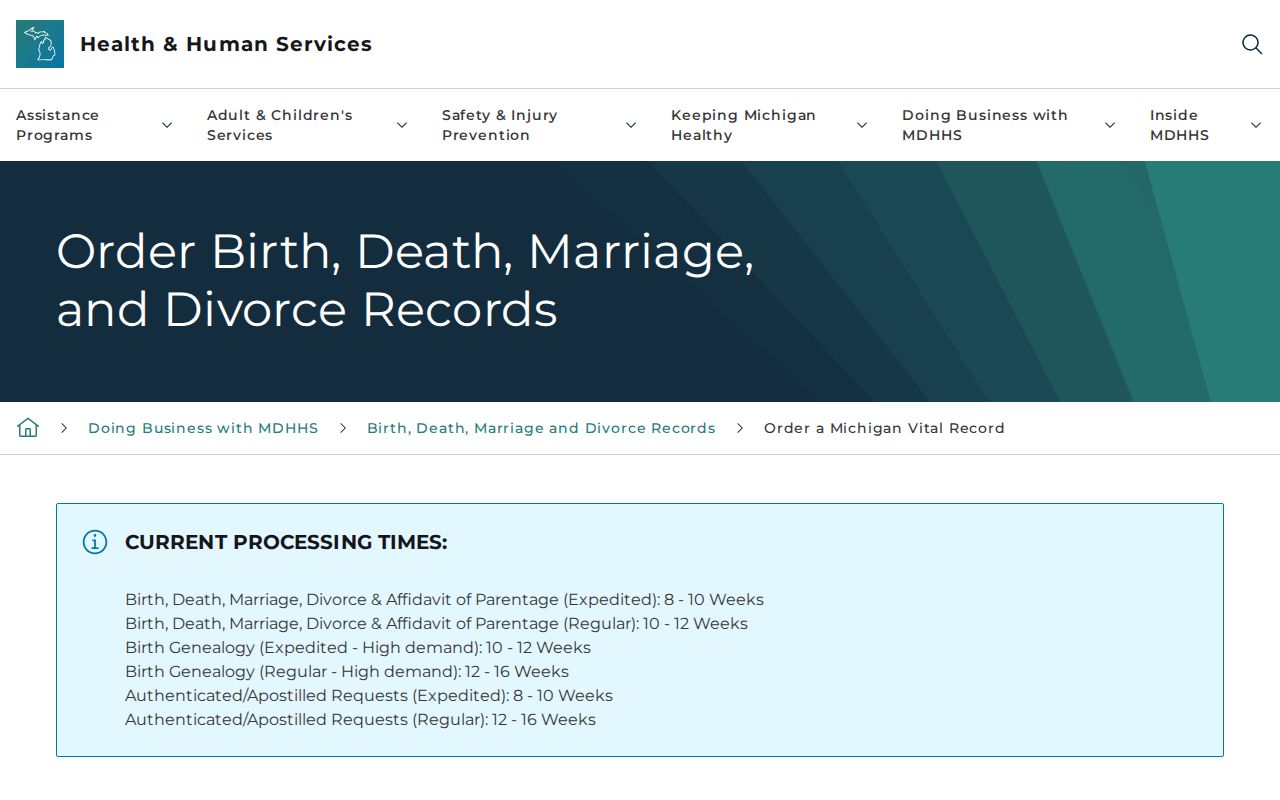
Orders can go through the authorized online or phone route, by mail with a hand-signed form and a copy of valid ID, at the weekday drop box, by appointment, or through eligible Will Call pickup. The Wayne County Clerk likewise offers mail, appointment, and online directions for its own records. Keep the form version, order number, event locality, spelling variants, and the custodian's response with your request.
Michigan Voter Limits for Resident Lookup
The Michigan Voter Information Center is the official self-service tool. It covers registration, polling place, and ballot questions. A blocked connection says nothing about a voter. It does not mean anyone is unregistered. For local registration or precinct questions, ask the township clerk directly. Wayne County Elections handles county administration. It publishes official precinct-level results, though those are aggregate counts rather than a resident list.
Michigan's Qualified Voter File can be requested through the SOS FOIA process. Define the jurisdiction and field list up front. Define the date or election range, file layout, and delivery method too. Released QVF data can include full name and residence or mailing address. It can also include year of birth, registration date, status, voter ID, and history. Driver or state-ID numbers, month and day of birth, phone, email, digitized signatures, the last four Social Security digits, and certain application details are exempt. Delivery comes by encrypted flash drive or FTP, never routine email. Use the official QVF request form and honor the privacy limits it states.
Van Buren Township Resident Clues
For family history, the Belleville Area District Library Special Collections holds local newspaper microfilm back to 1895. It also offers an obituary index, cemetery listings, military records, and local-history books. DigiFind-It adds Belleville-area directories from 1921 through 1972. It includes digitized newspapers from 1929 through 2021. Yearbooks from 1932 through 2025 are there too. Search both Belleville and township name variants. Then cite the publication, date, page, and locality. Do not treat a scan as a modern resident profile.
Four township cemeteries offer another historical route. Denton, Otisville, Soop, and Tyler are the four. Use the township cemetery page to start. The township publishes no public interment-name database. The clerk or cemetery channel is the right fallback for plot or burial confirmation. Remember what a burial record proves: an interment, not present residence or family identity.
Van Buren Township License Leads
Michigan LARA license lists and MiPLUS can confirm a credential's status, expiration, issue date, profession, and specialty. They can also confirm any available address field. A Michigan business filing can name an entity, its status, and its registered office. It may also list a role such as agent, officer, member, or manager. These are record-specific leads only. They do not prove a person currently lives in Van Buren Township. Confirm any result by license or entity number through the issuing agency. Do that before you rely on it. The LARA license page shows the state route for credential verification.
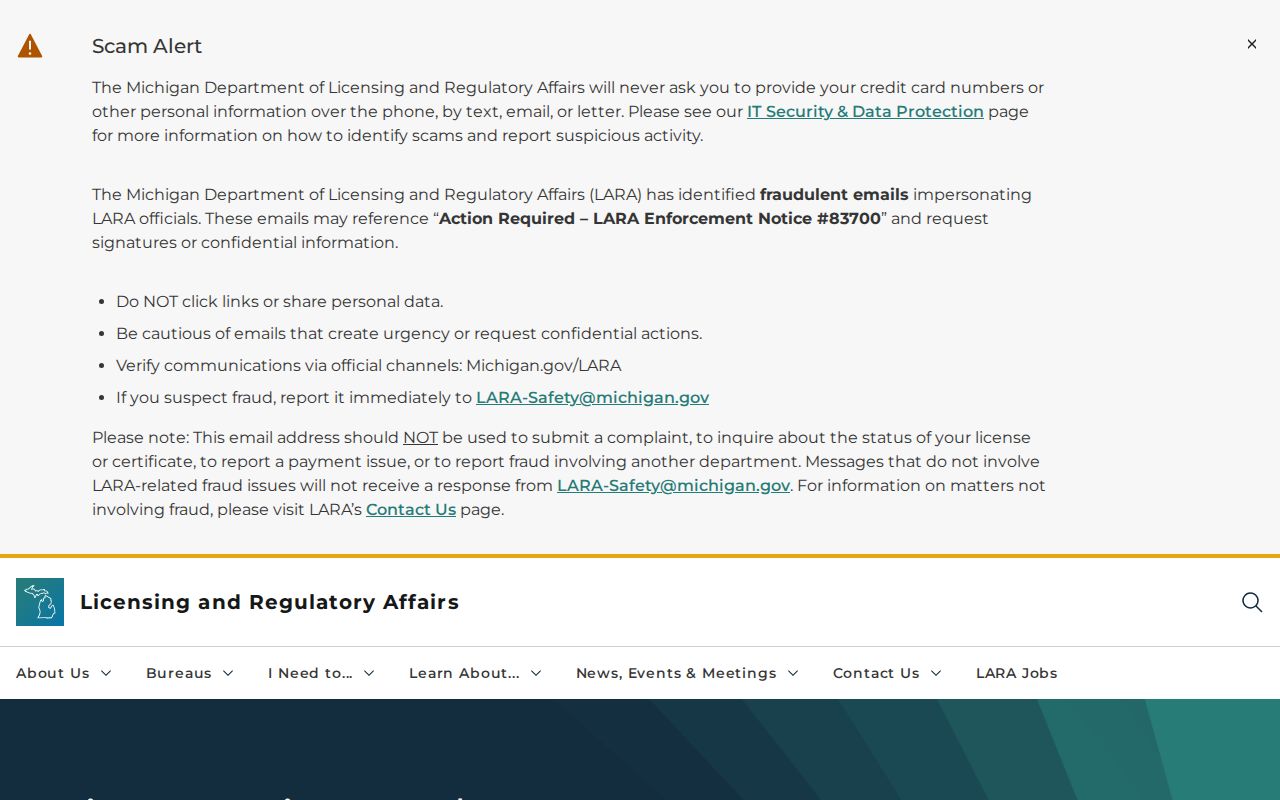
A credential record answers the status question. BSA or Wayne GIS handles the separate parcel and jurisdiction check.
Verifying a Van Buren Township Resident Lookup
Anchor a name to a place with a sequence you can repeat. Start with BSA or Wayne GIS. Save the query date, exact spelling, parcel ID, jurisdiction label, and whether the displayed address is situs or mailing. Then add a dated directory, newspaper, court, or vital-record clue. But only add it when it answers a different part of the question. Sometimes a verified official document or restricted copy is necessary. When it is, and you are authorized to ask, take it to the custodian. That step closes the loop on the lookup.
- Define the claim to test, including the name, address or period, and record category.
- Confirm Van Buren Township jurisdiction with a parcel ID, legal description, or assessor record.
- Search exact and variant names, retaining the date and source URL for each result.
- Require a second independent signal, then record any conflict instead of merging records by assumption.
- Use the court clerk, MDHHS, Wayne Clerk, library, or township office for the applicable official fallback.
- Docket
- A court’s organized record of a case and its public events, identified by its case or tracking number.
- Index versus image
- An index points to a record; an image is the document view and may require an account, payment, or custodian request.
- Certified copy
- A custodian-issued copy bearing the certification required for the authorized purpose, not a portal screenshot.
A single resident record only covers one person. For a full street or a chain of neighboring addresses, the Van Buren Township street directory offers the better workflow. Expanding one lookup into a block list by hand is slower and easy to get wrong, so start with the street-level pages instead.
Van Buren Township Resident Lookup Boundaries
Michigan FOIA, MCL 15.231 et seq., opens public-body records to requesters. Exemptions still shield certain data. A narrow written request works best. Name the township, the department, the record type, the date range, and your preferred delivery. The township's FOIA page is the local channel for filing. FOIA never forces protected data into the open. Ordering a vital record is not a substitute for a request.
The Michigan Address Confidentiality Program adds another wrinkle. Eligible participants get a designated address with mail forwarding. A real address may be withheld or swapped for the substitute one. So a missing address result proves nothing about whether someone lives in Van Buren Township. Keep protected addresses, birth dates, driver-license data, signatures, direct contact details, victim information, and other exempt fields out of any resident lookup record. When an official record looks wrong, ask the responsible custodian to correct it rather than reconciling the difference by inference.
Lawful use. Use public records for personal, lawful research and never use a Van Buren Township resident lookup to stalk, harass, intimidate, or expose a protected person.